Dive into the fascinating world of Amber, a fossil resin with golden hues. Explore its age-old history, its...
Sélénite : Histoire, Origine, Vertus, Composition, Signification et Entretien
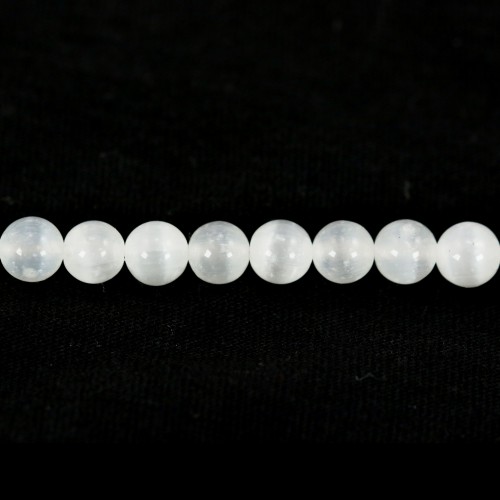
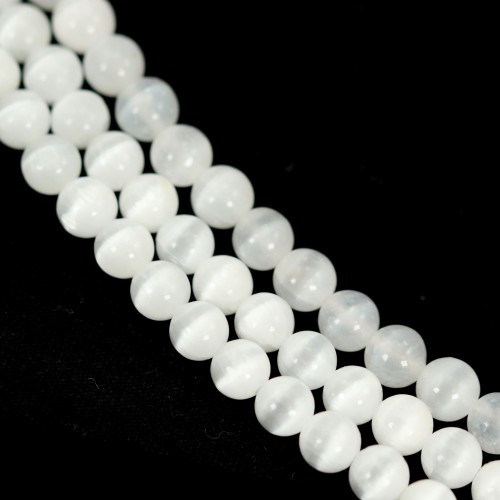
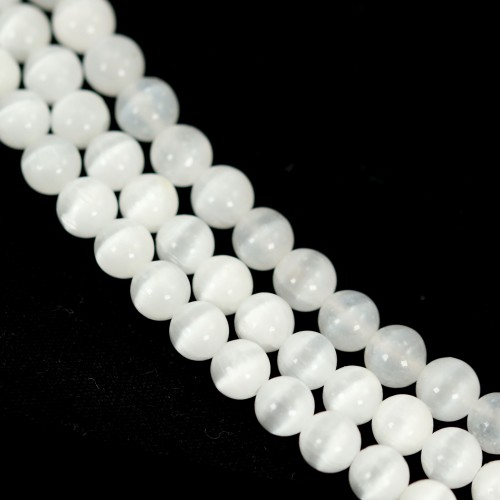
Selenite, with its lunar glow and mysterious translucency, invites us on a journey that transcends mere aesthetic appeal to delve into the depths of the earth and human history. This mineral, which has captivated the imaginations of many civilizations, remains a fascinating subject for lovers of natural stones today. Let's dive into the captivating story of Selenite, from its ancient origins to its contemporary significance.
History of Selenite Stone
Etymology
The name "Selenite" has its roots in ancient Greece, being closely linked to "Selene", the lunar deity revered for her luminous beauty and pure glow. Daughter of the Titans Hyperion and Theia, Selene is a symbol of purity, benevolence, and kindness, qualities that are echoed in the gentle radiance and soothing light of Selenite, thus recalling the serene clarity of the moon in the night sky. Moreover, another etymological theory suggests that the term Selenite derives from the Greek word "selenitis", literally "moonstone", referring to this mineral's ability to capture and reflect moonlight with astonishing fidelity.
Discovery and Use in History
Although the use and appreciation of Selenite date back millennia, its "official" discovery as a distinct mineral is lost in the history of gemmology. It was only with the advent of modern mineralogy that Selenite was clearly identified and classified among the varieties of gypsum.
Selenite has held a place of honor in many cultures and civilizations through the ages. In ancient Egypt, it was used for its protective properties and as a medium for sacred inscriptions. In ancient Rome, it was attributed virtues of mental clarity and protection. In the Middle Ages, it was commonly used in decorations and reliquaries, valued for its translucent beauty and sheen.
Origin and Composition of Selenite Stone
Family / Group of Selenite
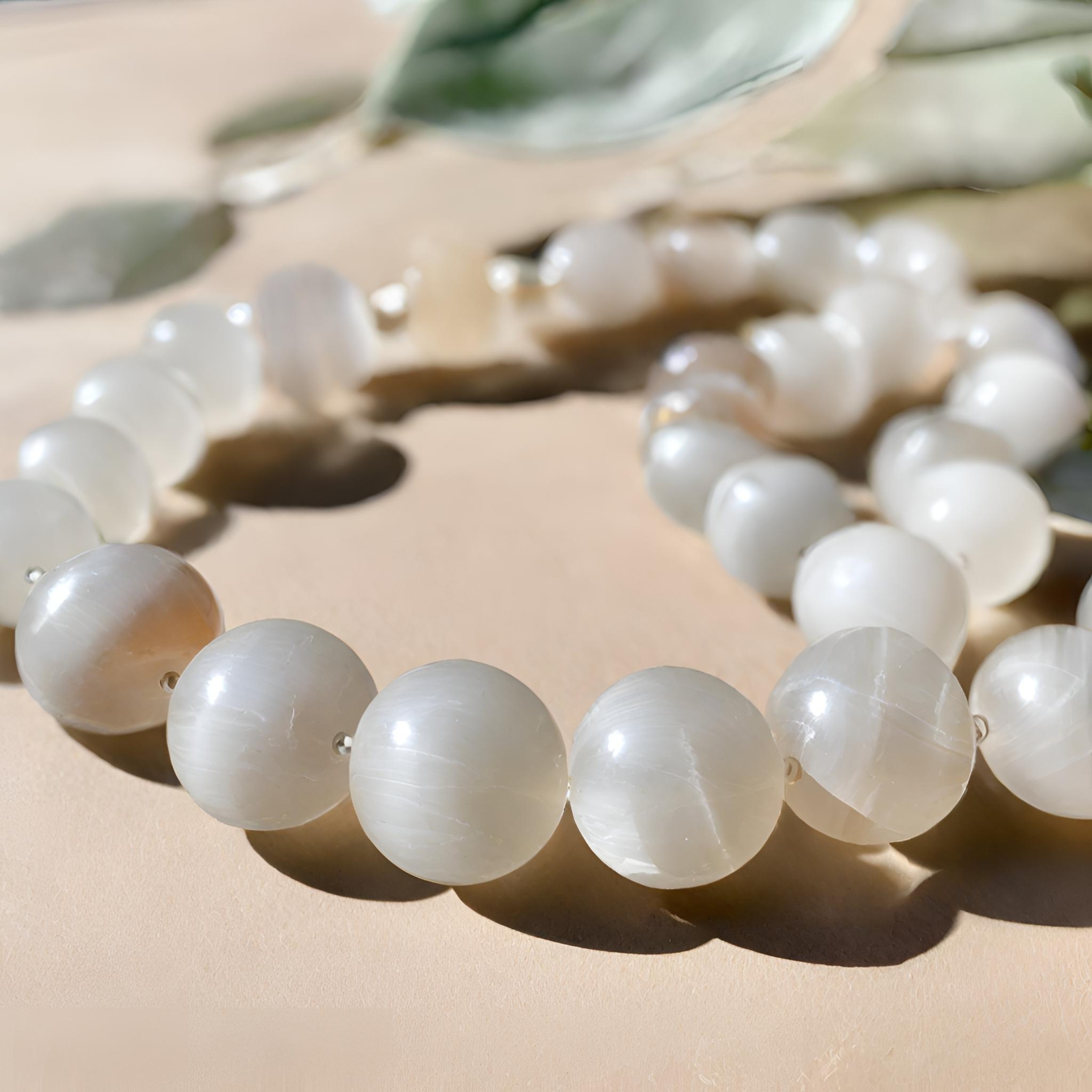
Selenite is a crystalline variety of gypsum, a mineral classified within the sulfate group. Gypsum, known for its ability to form under a variety of geological conditions, encompasses several varieties, among which Selenite stands out for its purity and translucency.
Chemical Composition and Density of Selenite
The chemical composition of Selenite is CaSO4·2H2O, meaning it is composed of hydrated calcium sulfate. Its density is relatively low, between 2.3 and 2.4, giving it a characteristic lightness. This composition is also responsible for its translucency and pearlescent sheen. For colored varieties of Selenite, traces of other minerals or impurities are responsible for their specific hue.
Origin and Formation of Selenite
Selenite primarily forms through evaporation in salt lakes, lagoons, or shallow marine areas. This formation process requires specific conditions: slow evaporation and an increasing concentration of dissolved minerals, which lead to the crystallization of calcium sulfate into thin, translucent layers of Selenite.
Selenite deposits are found in many places around the world, notably in Mexico, Italy, and the United States, as well as in Brazil, Canada , and China. Mexico, in particular, is renowned for its Naica caves, where some of the largest crystals of Selenite ever found were discovered.
The hardness of Selenite on the Mohs scale is 2. This means it is relatively soft, easily scratched by harder objects. This property requires careful handling and maintenance to preserve its natural beauty.

Meaning and Virtues of Selenite
The Selenite is rich in symbolism, often associated with clarity, purity, and connection to higher planes of consciousness. Its moon-like light symbolizes intuition, inner peace, and protection. It is seen as a bridge between the material and spiritual worlds, offering an opening to higher levels of understanding.
Lithotherapeutic Virtues of Selenite
On Physical Level
Many traditions attribute beneficial effects on the body to Selenite, notably a soothing influence on the nervous and immune systems. It is also credited with promoting the fluidity of energy circulations, which can contribute to a general sense of well-being.
On Psychic Level
Selenite is renowned for its ability to clear the mind, raise consciousness, and promote meditation. It helps overcome emotional blockages and confusion, encouraging inner peace, mental clarity, and expanded awareness.
Note that lithotherapy is not a substitute for medical treatment or medical expertise.
Meaning of Selenite
The meaning of Selenite extends beyond its physical attributes, reaching into its metaphysical qualities of purification and spiritual enlightenment. It is often used as a tool for energy clearing and space harmonization.
Selenite is associated with the crown chakra, located at the top of the head, which is the center of spirituality and connection to the universal. Acting on this chakra, it promotes spiritual opening and the reception of higher guidance. Selenite, with its high vibration, is also reputed to stimulate the third eye chakra, enhancing greater thought clarity, expanded consciousness, and increased perception beyond the physical realm. Moreover, Selenite can help unlock and harmonize the throat chakra, encouraging the expression of truth and feelings with clarity and integrity.
While it can benefit everyone, Selenite is often associated with the Cancer sign, for its connection to the moon, and the Aquarius sign for mental clarity.
It is also used to celebrate the 13th wedding anniversary, symbolizing renewed clarity and purity in the relationship.
Maintenance, Purification, and Recharging of Selenite
Cleaning and Purification of Selenite
Selenite , due to its solubility and low hardness, should not be cleaned under running water.
The cleaning and purification of the stone can be done by:
- Smudging: exposure to sage smoke,
- In the light of the moon
- By placing it next to an Amethyst geode.
It is crucial to avoid any contact with water, especially salt water, to prevent damage to the stone.
Recharging of Selenite
The recharging of Selenite is ideally done under moonlight, especially during the full moon, to strengthen its connection to this celestial body.
Placing it on a quartz cluster or near other charged crystals can also revitalize its energies.
Selenite, beyond its aesthetic beauty, embodies a rich geological and cultural heritage. Through its reflections and luminescence, it continues to amaze and inspire, offering a tangible link to the past while beautifying our present.