Dive into the fascinating world of Amber, a fossil resin with golden hues. Explore its age-old history, its...
Turquoise: History, Origin, Composition, Virtues, Meaning and Recharging of the stone
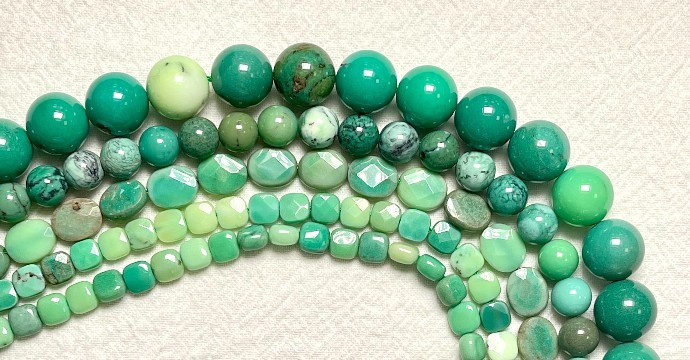
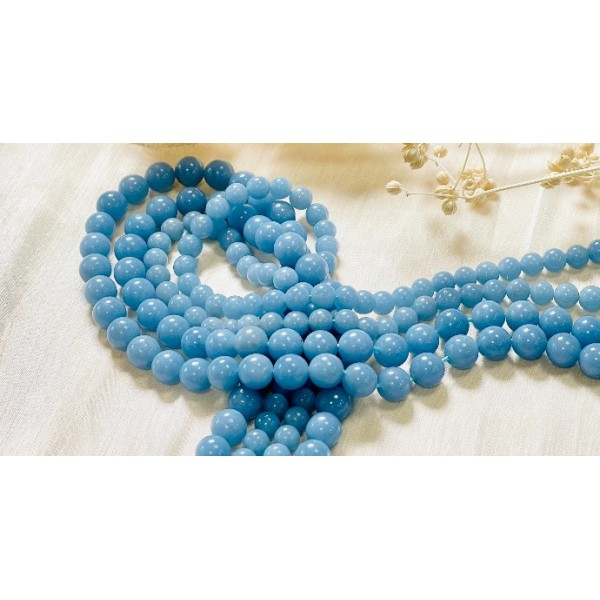
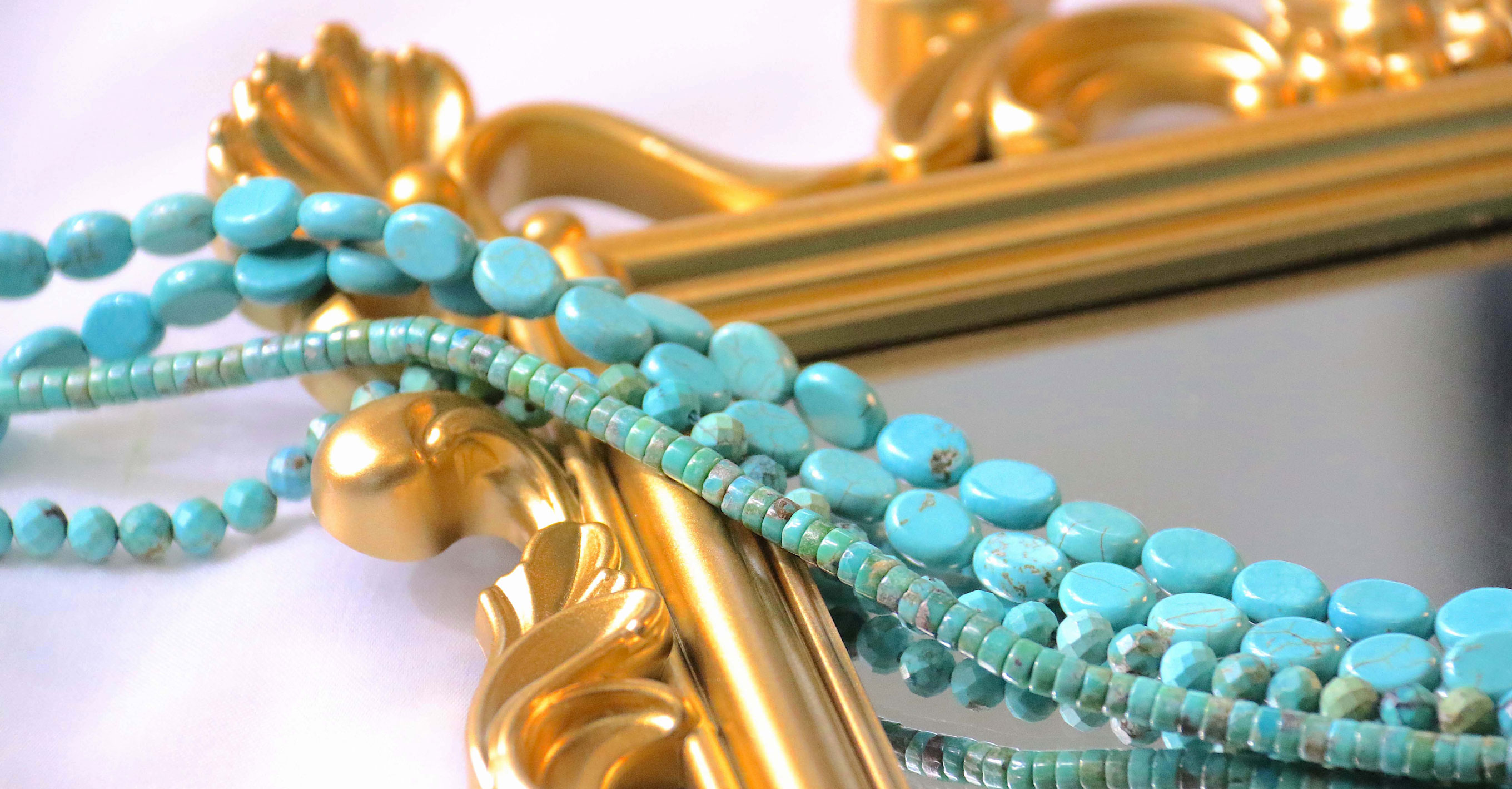
Turquoise is a light to dark blue-green mineral from the Phosphate family. It is commonly found in New World mines and artifacts. This natural stone has been used for thousands of years as an ornamental stone and as a traditional material for jewelry, masks, utensils and other objects. It has been prized for its brilliant hues and origin for thousands of years by cultures the world over. Today, its popularity is on the rise, especially among lithotherapy enthusiasts.
History of Turquoise stone
The etymology of the word Turquoise comes from the Old French "torchis" or "turqueise" meaning "Turkish" or "from Turkey". Although the stone did not originate primarily in Turkey, it was imported into Europe via that country. In reality, natural blue stone was mainly quarried in Iran (ancient Persia) and Central Asia. In Persia, it was called "pirouzeh" or "firouzeh", meaning "victorious" or "triumphant". During the Crusades, the Turks introduced Turquoise to Europeans, and because of its trade route through Turkey, it was finally called "Turquoise" in the 1600s. The name "callais", meaning "beautiful stone", was used by some ancient authors such as Pliny the Elder to describe a blue-green stone, but it is not certain that this stone is actually Turquoise.
Turquoise has been mined and used by mankind for thousands of years, starting with the Egyptians who used it to create jewelry and decorative objects.
Among the Persians, natural stone was exchanged as currency for other objects.
Some civilizations, such as India and Tibet, believed in the powers and benefits that Turquoise could bring, including courage and benevolence.
In the Amerindian cultures of the Southwest, Turquoise has been prized for thousands of years for its blue color and its association with sky, water and earth. Among the Navajo, it is considered a "stone of the heavens", a gift from the Creator that links humans to the universe. This is why it is commonly found in Amerindian jewelry, masks and other decorative objects. Among the Aztecs, Turquoise was considered too powerful for humans, and only deities were allowed to wear it. Finally, among the Apaches, the stone was used as a good-luck charm, attached to their weapons so as never to miss their target.
Turquoise began to take off in Europe in the 1800s. Archaeological digs in Egypt and the discovery of Tutankhamen's tomb led to an explosion in the stone's popularity. The oldest known Turquoise artifact is a carved bracelet dating from around 6000 BC. Because of its durability and resistance to corrosion, Turquoise has been used for ornamental and ceremonial purposes in many parts of the world.
The oldest known reference to Turquoise appears in the Epic of Gilgamesh, one of the oldest human literary tablets discovered to date.

Origin and composition of Turquoise stone
Turquoise belongs to the Phosphate family, more precisely to the Alumina Phosphate family. It is mainly composed of hydrated basic phosphate, aluminum and copper, with the chemical formulaCuA16(PO4)4(OH)8.4H2O. The density of the stone varies between 2.6 and 2.9.
Turquoise stone can be found in a variety of different places, such as in veins or fractures in source rocks like carbonates, schists and cherts. It can also have varying chemical compositions. The process of creating turquoise involves the alteration of pre-existing minerals in the presence of water. This process is known as hydrothermal alteration.
Turquoise is a secondary copper mineral formed by oxidation and hydration of copper minerals in adjacent rocks. Turquoise is found in association with other copper minerals such as Chrysocolla, the Malachite and Azurite. Because of the way Turquoise is formed and its high level of hydration, it is a porous stone that absorbs water from its surroundings.
The most common varieties of Turquoise stone are known for their wide range of blue and green hues. These Turquoises are also known for their high copper content and low aluminum content. Thus, this variation in coloration is due to the distinct chemical composition of these Turquoises as copper hydroxide is blue while aluminum hydroxide is colorless. This variation in composition is what gives these Turquoises their blue color.
Origin of Turquoise stone
The main sources of Turquoise are located in the following countries: China, Tibet, Egypt, Iran, Afghanistan and the United States.
Turquoise stone has a hardness of between 5 and 6 on the Mohs scale.
Virtues and Significance of Turquoise in lithotherapy
In lithotherapy Turquoise is a stone of communication.
Turquoise in lithotherapy
On a physical level, natural stone Turquoise is considered in lithotherapy as a purifying and soothing stone. It improves blood circulation and the body's organs. In addition, the stone helps to regenerate and soothe wounds and pain. Turquoise can also improve the management of nutrition.
On the mental level, in lithotherapy, Turquoise is known for its many communicative and regenerative benefits. It facilitates speech and encourages self-expression, communication and, above all, listening to others. Turquoise brings relaxing benefits to improve sleep. Finally, this natural stone is said to protect the wearer from bad vibes. It calms anger and develops empathy, absorbing bad energies and converting them into positive ones.
Please note that lithotherapy is not a substitute for medical treatment or expertise.
Turquoise stone meaning
Turquoise is a symbol of union between heaven and earth.
Turquoise is associated with the throat chakra, which amplifies communication and encourages self-expression. It is also associated with the heart chakra, which reinforces positive emotions such as love, benevolence and empathy.
Turquoise is also associated with the zodiac signs Aquarius, Pisces, Gemini, Sagittarius, Libra and Scorpio. It's also the birthstone of December and the ideal stone to celebrate 11 years of marriage.
Turquoise stone care, purification and recharging
To care for your stones Turquoise, we suggest a few methods:
Cleaning and Purification
It is important to thoroughly clean and purify your Turquoise to keep its natural radiance:
- Rinse the stone in unsalted distilled water for a short time before using a soft cloth to gently dry the stone,
- Purify it using fumigation, by placing Turquoise in the smoke of purifying herbs for a few minutes.
Reloading
Don't forget to reload the stone Turquoise to take full advantage of its powers:
- Recharge the natural stone with a few rays of sunlight over a period of time,
- Bury Turquoise in the ground for a full day to recharge, then rinse to remove any remaining dirt,
- Place a quartz cluster next to it to recharge it.