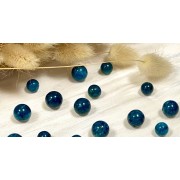
Dive into the fascinating world of Amber, a fossil resin with golden hues. Explore its age-old history, its...
Tourmaline: History, Origin, Composition, Virtues, Significance and Recharging of the stone
Tourmaline is a member of the Silicate family. It is one of the few minerals that can be found with all the colors of the rainbow in a single mineral species. This makes Tourmaline one of the most fascinating of all minerals. It is highly prized for its various beneficial properties in lithotherapy.
History of Tourmaline stone
The name "Tourmaline" comes from Sinhalese, the official language of Sri Lanka, "turmali" meaning "stone of many colors".
Tourmaline has a vast and ancient history, known thousands of years ago. The stone has been confused many times due to its many colors, which have made it difficult to identify.
The Greek philosopher Theophrastus began to take an interest in the colored stone and to research its properties. Eventually, he discovered that if Tourmaline was heated, it acquired pyroelectric properties, capable of attracting various light objects such as straw, ashes or small pieces of wood.
Years later, in Antiquity, Tourmaline stone, more specifically black Tourmaline, was linked to magic and sorcerers who used the stone to protect themselves from evil spirits and forces.
In India, people value Tourmaline enormously, believing that wearing it can bring luck and prosperity. Some people used it for religious or spiritual rituals.
In the 17th century, the popularity of this natural stone grew and it was increasingly used in jewelry, as in the Russian crowns inlaid with red Tourmaline.
A century later, Dutch merchants began importing Tourmaline from Sri Lanka. They discovered that the stone had pyroelectric properties, and nicknamed it "asshentrekker", which comes from the Old Dutch word for "ash catcher".
Some African, Australian and Amerindian tribes use Tourmaline stone as a talisman for its protective virtues and to guard against danger.
In China, Empress Cixi fell under the spell of pink and red Tourmaline. As a result, she had a large quantity of Tourmaline imported from California, to be used in a wide range of accessories such as brooches, bracelets and pendants.
However, in 1912, China collapsed and Tourmaline market collapsed with it. It wasn't until the 1950s that the market recovered and began to expand.
Today, the beauty of Tourmaline has expanded worldwide, without losing its value. Many jewellers love working with the stone to create jewelry such as bracelets and necklaces. Tourmaline is also known for its various lithotherapy virtues.
Origin and composition of Tourmaline stone
Tourmaline is a mineral belonging to the Silicate family. The stone is a complex compound of silicates, aluminum borosilicates with iron, magnesium and alkalis, with the chemical formula (Na,Li,Ca)(Mn,Mg,Fe,Al,Ti,Cr)9((OH,F)4/(BO)3/Si6O18). Tourmaline's density generally varies between 3 and 3.3.
Tourmaline is found in various rock formations, including granites, schists and pegmatites, but also in metamorphic rocks such as gneiss. Tourmaline is formed when other minerals in rock formations are crushed and heated, causing fluids to form in the minerals and thus altering their chemical composition.
Origin of Tourmaline stone
The main sources of Tourmaline are located in Brazil, Africa, Tanzania, the United States, Sri Lanka, Madagascar, India, Afghanistan, Angola, Australia and Russia.
Tourmaline has a hardness of between 7 and 7.5 on the Mohs scale.
Tourmaline stone colors
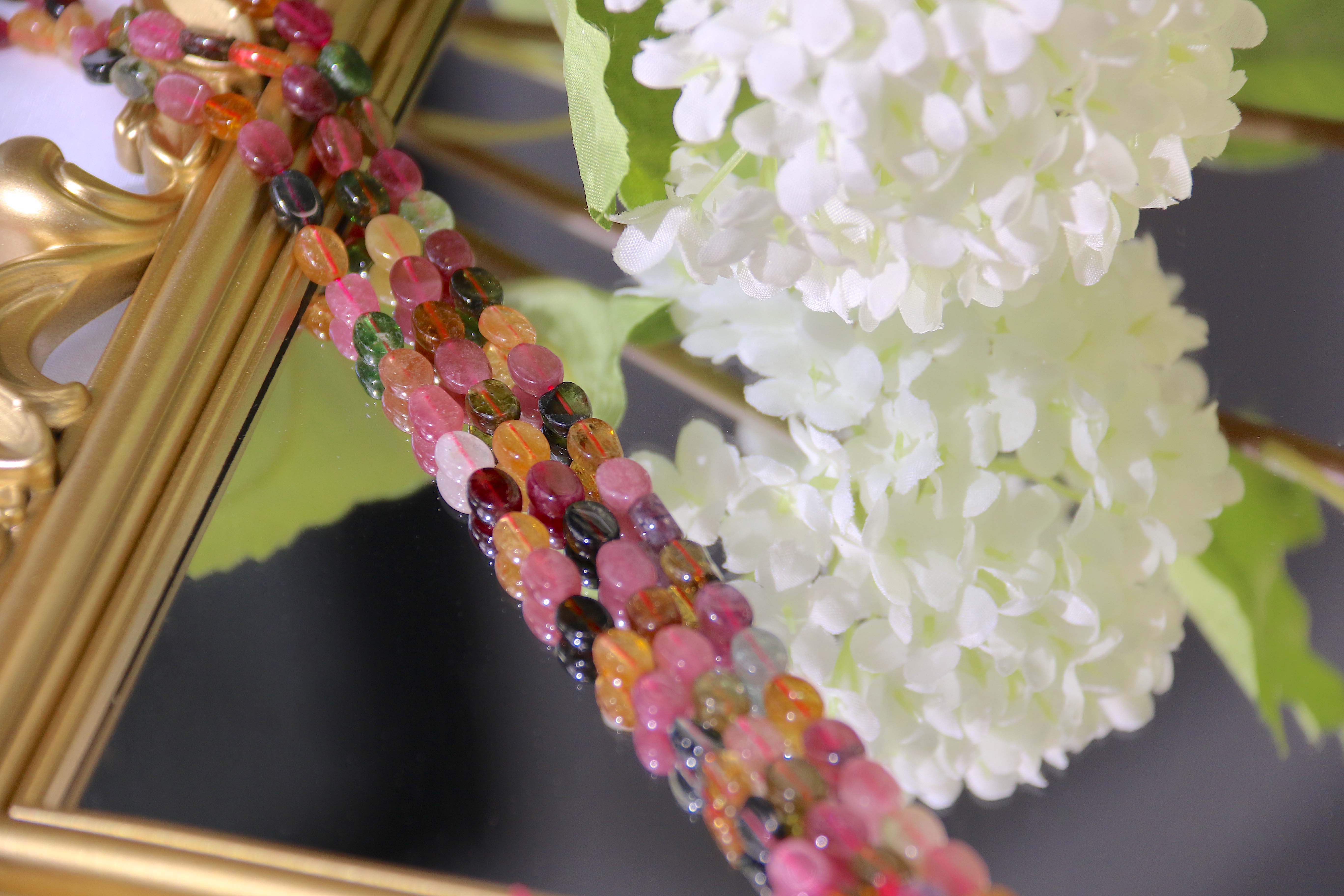
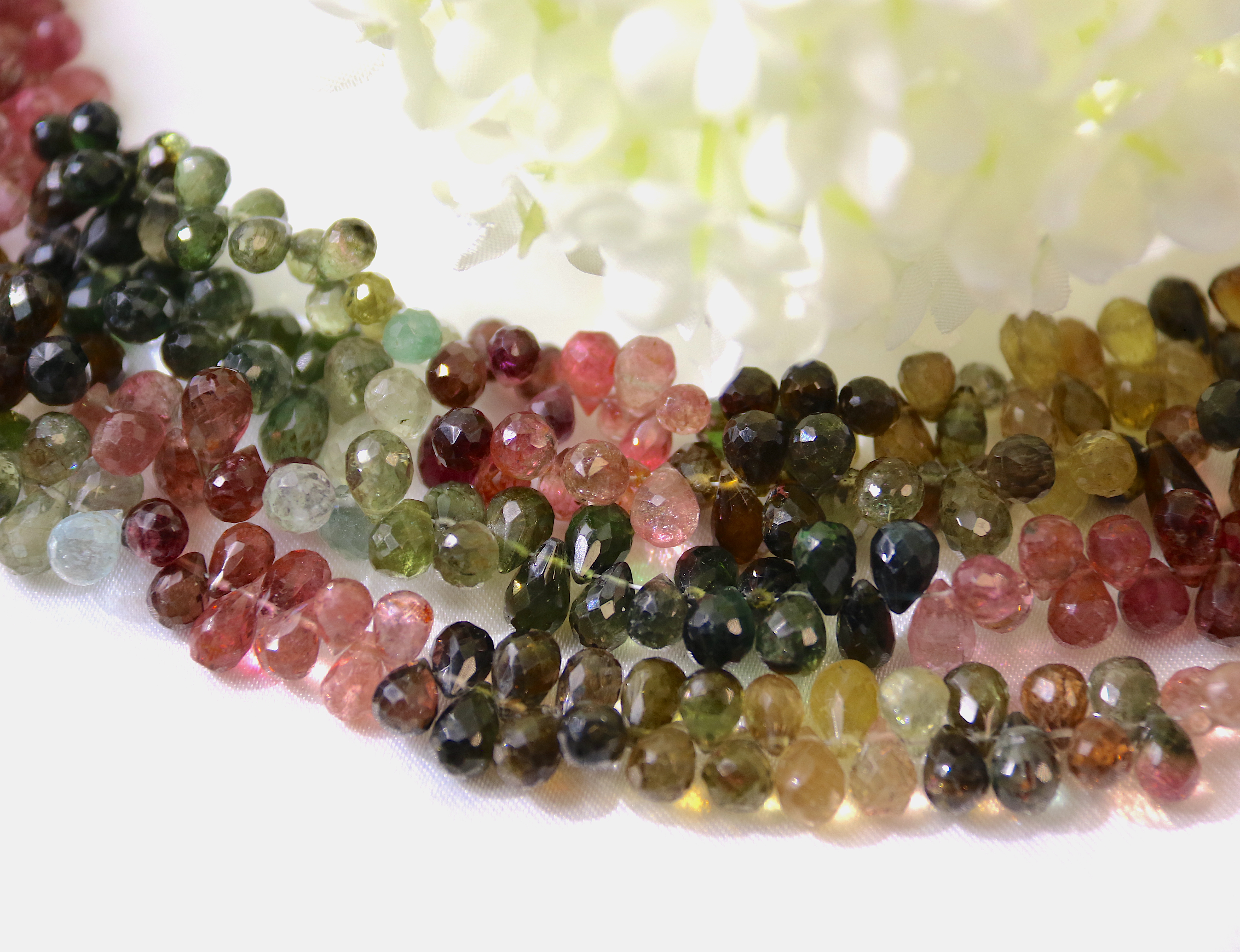
There are more than 30 mineral species recognized by the IMA (International Mineralogical Association), each with its own color of Tourmaline, these range from intense reds to transparents, greens, blues, blacks, yellows, pinks, purples, browns and even multicolors. The colors are due to the various inclusions of minerals such as iron, titanium and manganese.
Some stones are a combination of two or more colors, making their appeal very varied. The most sought-after colors are red, blue, green and black. Tourmaline can be found in almost every shape and size.
Each color variety has a specific name. Here are the species of Tourmalines the best-known :
- Elbaite: the most colorful and precious Tourmaline species, including :
- - Paraíba tourmaline: blue-green.
- - Watermelon tourmaline: pink and green.
- Rubellite: pink to red.
- Indicolite: blue in color.
- Verdelite: green in color.
- Schorl: the most common Tourmaline species, often black in color.
- Dravite: a rare Tourmaline species, dark brown to black in color. Its "Champagne" variety is even rarer, offering honey colors.
- Uvite: a less common Tourmaline species, usually green, brown or black.
- Liddicoatite: a rare Tourmaline species with multiple colors: pink, red, green, blue or transparent.
- Chromiferous: one of the rarest Tourmaline species, green in color.
- Rossmanite: a rare pink to colorless Tourmaline.
- Povondraite: an unusual Tourmaline species with brown to black colors.
- Chromdravite: a less common Tourmaline species, green to yellow-brown in color.
- Tsilaisite: a less common Tourmaline species, yellow to brown in color.
- Hydroxyuvite: one of the rarest Tourmaline species, orange in color.
- Foitite: an unusual Tourmaline species with blue to black colors.
You can also find Cat's Eye Tourmaline in gray, black, green, blue or pink with shimmering reflections.
Virtues and Significance of Tourmaline in Lithotherapy
In lithotherapy Tourmaline is a stone of harmony and introspection.
Tourmaline natural stone in lithotherapy
Physically, Tourmaline is a natural stone considered to be a protector, capable of reducing electromagnetic waves and negative energies. In lithotherapy, Tourmaline reinforces the immune system, body balance and regeneration. It relieves stress, soothes pain and eliminates toxins from the body. The stone is ideal for reducing perspiration and allowing longer diffusion of its fragrance or essential oils.
On a mental level, natural stone Tourmaline soothes the emotions and helps reduce stress to better manage situations. The stone's pyroelectric ability attracts positive emotions, diffuses them and, at the same time, keeps negative ones at bay. In lithotherapy, natural stone Tourmaline is an ally for all those who practice meditation, boosting self-confidence and intelligence and helping to release certain blockages.
Of course, stone Tourmaline is very diverse and each species has a different virtue in lithotherapy:
- Blue Tourmaline improves and strengthens the body in general, including muscles, bones, the immune, digestive and nervous systems. It also lends fluidity to speech and accelerates regeneration. In addition, Blue Tourmaline stone boosts self-confidence and tolerance, promotes empathy and brings a better understanding of oneself and others, while reducing fears.
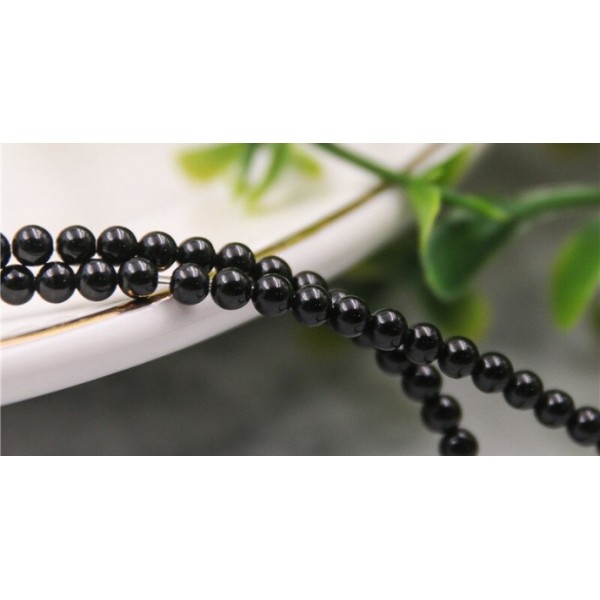
- Black Tourmaline blocks and protects the user from electromagnetic waves, reduces headaches, relieves muscular pain and improves blood circulation. It also protects and strengthens organs and the entire digestive system, such as the liver and kidneys. Black Tourmaline stone helps you reconnect with the world, calm hyperactivity, harmonize body and mind, ward off and protect against negative emotions such as stress and fear, and enhance concentration.
- Pink Tourmaline stone strengthens the body, including the cardiac system, the heart and throat disorders, while also benefiting the skin. Highly valued for its emotional support, the stone will soothe old wounds in the heart, reducing strong, explosive emotions to bring a sense of calm and serenity. In addition, Pink Tourmaline promotes compassion and benevolence, boosts self-confidence and self-esteem, reconnects body and mind, and brings love to self and others.
- Green Tourmaline promotes regeneration while regulating the cardiac system. It soothes muscular pain, strengthens the immune system and the nervous system, boosts energy, improves blood circulation and balances hormones. In addition, the green Tourmaline stone brings better sleep, calm, happiness and joy, and harmonizes body and mind. Last but not least, the stone boosts confidence and courage, warding off negative emotions such as sadness and promoting concentration.
- Yellow Tourmaline stone strengthens the digestive system and immune system, relieves muscular pain, promotes stamina and reduces fatigue. It also brings vitality, energy and joy, and boosts self-confidence and self-esteem. Yellow Tourmaline promotes concentration and clarity of thought.
- Tourmaline watermelon stone stimulates the body while strengthening the nervous and immune systems and regulating blood circulation. It accelerates healing, supports pregnancy, promotes fertility, revitalizes the body and dispels negative emotions such as jealousy or fear. Watermelon Tourmaline soothes fear, anxiety and shyness, while bringing a sense of security. It also promotes positivity and benevolence, brings wisdom, strengthens relationships and enhances creativity and imagination.
- Tourmaline cat's eye stone strengthens vision, boosts the immune system and regulates the nervous system. It improves circulation and reduces headaches. In addition, Cat's Eye Tourmaline increases good luck, brings prosperity, calm and serenity. Finally, the stone promotes wisdom and intuition and protects against evil spirits and negative emotions.
Please note that lithotherapy is not a substitute for medical treatment or expertise.
Meaning of Tourmaline stone
Tourmaline symbolizes unity.
Tourmaline is associated with the root chakra, which promotes self-confidence, calm, vitality and security. In addition, this chakra improves blood circulation and brings stability. The stone is also linked to the heart chakra, which enhances relationships, fosters empathy and benevolence and, above all, brings a great deal of love. Finally, it is also associated with the throat chakra, which amplifies communication, stimulates creativity and facilitates speaking and listening.
Tourmaline is associated with many astrological signs, which vary according to their color. For those who appreciate blue tourmaline more, the most sensitive signs are Aquarius, Sagittarius and Pisces.
People who are more inclined towards green tourmaline, the astrological signs are Sagittarius, Pisces, Libra and Capricorn.
The signs associated with pink tourmaline are Aquarius, Libra, Aries and Taurus.
For those who appreciate red tourmaline more, the most sensitive astrological signs are Scorpio, Aries and Taurus.
Finally, black tourmaline is close to the astrological signs of Sagittarius, Scorpio and Cancer.
Stone Tourmaline is the birthstone of October, in addition to Opal. What's more, it's perfect for celebrating 8 years of marriage.
Tourmaline stone care, purification and recharging
To care for your Tourmaline, we suggest a few methods:
Cleaning and Purification
It is important to thoroughly clean and purify your Tourmaline so that it retains its natural brilliance:
- Rinse the stone in salted distilled water for a short time before using a soft cloth to gently dry the stone,
- Purify it using fumigation, by placing Tourmaline in the smoke of purifying herbs for a few minutes.
Reloading
Don't forget to reload stone Tourmaline to take full advantage of its powers:
- Recharge natural stone with sunlight for a few hours,
- Bury Tourmaline in the ground for a full day to recharge it, then rinse it to remove any remaining dirt,
- Place a quartz cluster next to it to recharge it.