Dive into the fascinating world of Amber, a fossil resin with golden hues. Explore its age-old history, its...
Opal: History, Origin, Composition, Virtues, Meaning and Reloading of the stone
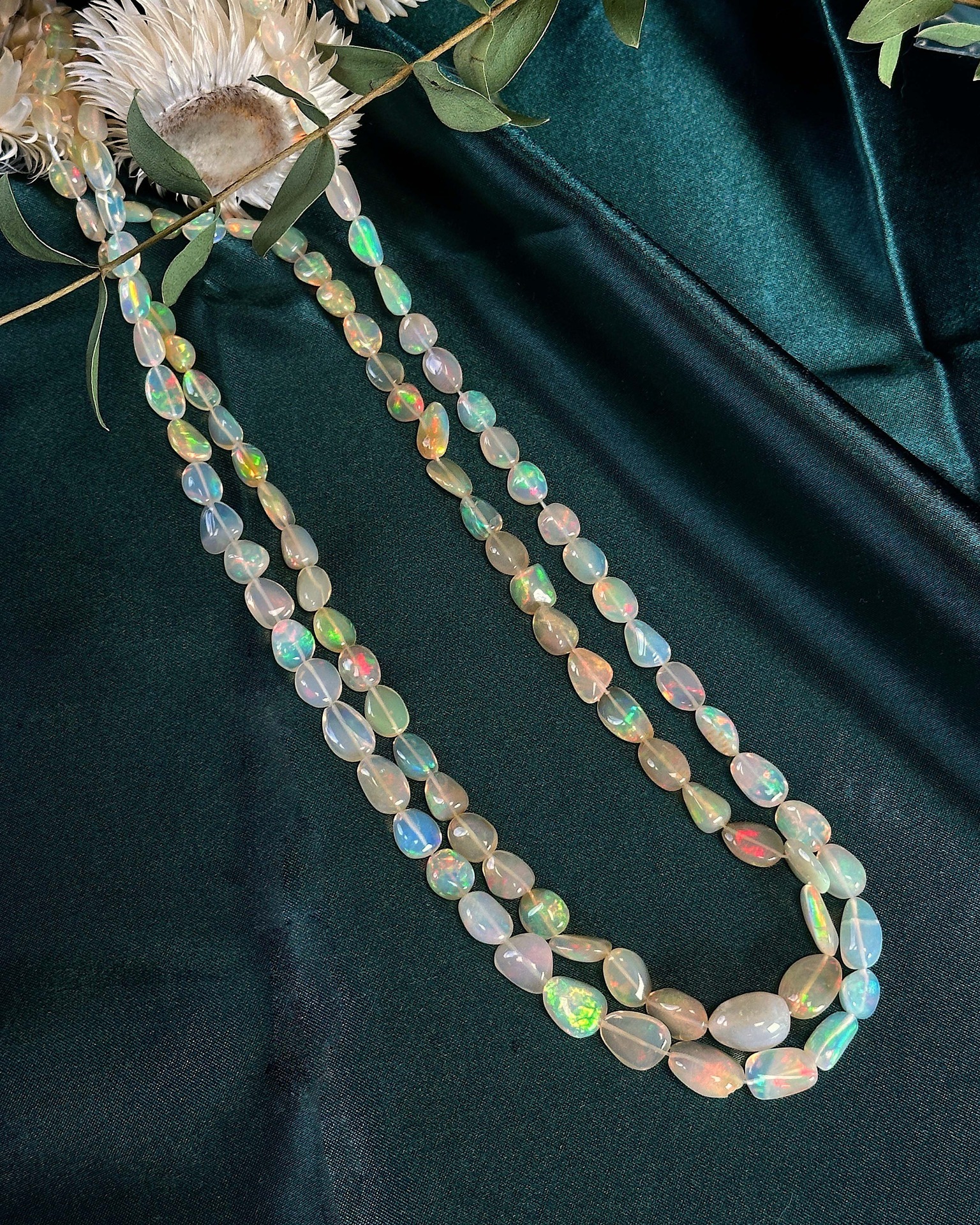
Opal is a much-loved natural stone in the world of jewelry. Its natural beauty and color make it a fine stone highly prized by collectors, especially rare stones such as Opals from Australia. Opal, like Labradorite, has an effect called "diffraction" or "opalescence".
History of Opal
Opal takes its name from the Latin "opalus", derived from the Sanskrit word "upala", meaning "precious stone". It was also named Opallios in Greek, meaning "sight of many colors". Opal is a very ancient stone, so many legends and stories have been attributed to it.
In Greek mythology, the stone is linked to Zeus, and Opal is said to have originated from Zeus' tears after his triumph over the Titans. Subsequently, the Greeks used Opal for fortune-telling and clairvoyance. In Roman history, the Romans used Opal as a source of hope and purity. Moreover, Marc Antony is said to have banished a senator who refused to sell Opal to Cleopatra. During the Middle Ages, Opal was known as "ophthalmios", meaning "eye stone". It was thus associated with the eyes, with their beneficent and revitalizing virtues. Women with golden hair believed that if they wore an Opal necklace, they would not lose their color.
Some civilizations believed that the stone was linked to the sky and thunderstorms, as was the case with nomadic shepherds and Bedouins, who believed that Opal contained lightning and that it fell from the sky in stormy weather. There's even an Arab legend which says that the shades of Opal come from the lightning that's trapped in the stone.
In an Indian legend, the goddess of the rainbow is said to have changed into Opal to escape her suitors who were under the goddess's spell. For a time, Opal was considered a bad-luck charm or was associated with black magic, especially in 17th-century England. Today, opal is highly prized for its beauty and iridescent hues.
Origin and composition of Opal
Opal belongs to the large Silicate family, and more precisely to the category known as hydrated silicon dioxide. The stone is composed of silicon dioxide and water, with the chemical formula SiO2-nH2O. Its density is between 1.9 and 2.3.
Opal forms in sedimentary and volcanic rocks, particularly in areas rich in silica. It can also be found in areas of altered plate tectonics, such as dried-up lakes, caves or hot-spring deposits.
Opal stone has an effect called "diffraction" or "opalescence", which is simply a play of colors. This play of colors is explained by the phenomenon of light penetrating Opal and breaking it down into different wavelengths, creating the colors. Through usite, the tiny silica particles in opal create different diffraction patterns, producing different colors, sizes and spacing.
Opal comes in many varieties, from the tiniest to the most extraordinary:
- Noble opal: contains impurities of alumina, iron and titanium,
- Fire opal: contains impurities of iron oxide,
- Ethiopian opal: contains impurities of iron, copper, manganese, silicon and oxygen,
- Common opal: contains clay, silica and limonite impurities,
- Crystal opal: contains silica impurities, as well as traces of iron, calcium and potassium,
- African opal: contains impurities of iron oxide, silica and other minerals
- Colored opal :
- pink: nanoparticles of titanium dioxide,
- yellow: traces of iron and magnesium,
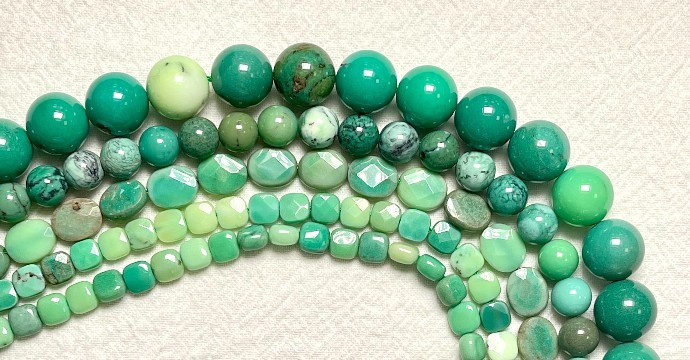
- green: traces of nickel, chromium and iron,
- grey: iron and silica impurities,
- blue: traces of copper,
- multicolored: different impurities that characterize different colors.
Origin of Opal
The world's main Opal deposits are found in Australia, Mexico, the USA, Brazil, Ethiopia, Hungary and the Czech Republic.
Opal hardness ranges from 5.5 to 6.5 on the Mohs scale.

Opal's virtues and significance
Opal is a stone of protection and serenity.
Opal in lithotherapy
On a physical level, Opal is a stone of benefit, not to mention beauty. Opal relieves muscular and joint pain. It also improves the digestive system and endocrine glands such as the thyroid and adrenal glands. Finally, the stone has a positive effect on the eyes, notably myopia, presbyopia and, above all, ocular fatigue.
On the psychic level, Opal brings enormous virtues to both relationships and spirituality. It favors relationships with friends and lovers, and strengthens bonds between people or spiritually. Opal also stimulates creativity, self-confidence, self-expression and, above all, intuition. Finally, the stone is capable of bringing emotional balance and keeping the mind calm.
Note that lithotherapy is not a substitute for medical treatment or expertise.
Meaning of Opal
Opal symbolizes serenity and spirituality.
Opal is very close to the root chakra, protecting against negative emotions and providing greater security. It is also accorded the solar plexus chakra, which enhances self-confidence and determination. And the heart chakra amplifies positive emotions such as love and empathy. Opal stone is linked to the astrological signs of Aquarius, Capricorn, Virgo, Gemini and Pisces. Opal is also linked to the birth month of October.
Opal care, cleansing and recharging
Opal cleansing and purification
Opal is a relatively fragile and sensitive stone. To care for your Opal stones, we recommend:
- Gently clean with a soft, dry cloth,
- Purify using the fumigation method (sage, palo santo or purifying herbs), leaving the stone in the smoke for a few minutes,
- Purify by placing a cluster of amethyst next to your stone,
- Please note that it is not advisable to expose the stone to direct light and/or heat, as this may cause it to crack and, in the worst case, cause permanent damage.
Recharging Opal
Opals can be recharged by letting them take a moon bath, burying them in the ground for several days in a cool place, or with a cluster of quartz next to them.