Dive into the fascinating world of Amber, a fossil resin with golden hues. Explore its age-old history, its...
Diamond : History, Origin, Composition, Virtues, Meaning and Reloading of the stone
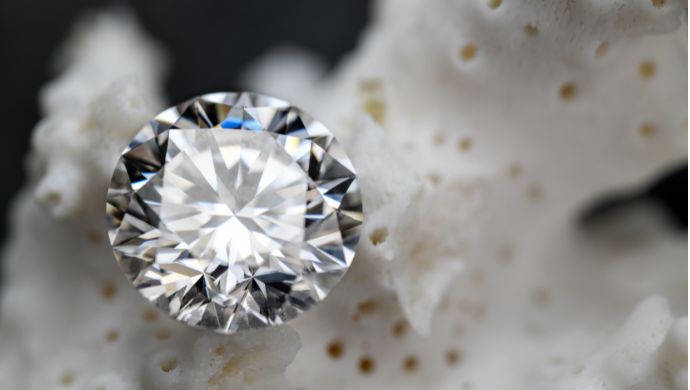
Diamond is a member of the carbon family. It is a precious stone that has fascinated people for thousands of years, due to its exceptional beauty and unique properties. Diamond can help strengthen many aspects of the body and spirit in lithotherapy. It is the world's most prized natural stone for its beauty and significance.
History of Diamond stone
The word "Diamond" comes from the ancient Latin "diamas" meaning "magnet", the suffix "-antis" and the word "adimas" were the predecessors of the adjective "adamantin", which is the ancient noun "adamant" meaning "diamond". In ancient Greek, the term "adamas" means "invincible" or "unalterable" to describe Diamond.
Diamond has a rich and ancient history. In the first century AD, the Roman naturalist Pliny declared: "Diamond is the most precious, not only of precious stones, but of all things in this world".
The first Diamonds were mined in India some 3,000 years ago. They are mainly found and collected along rivers and streams. The Indians called this natural stone the "fruit of the stars" and considered it to come from sacred springs. The country's resources made it possible to produce limited quantities for a market reserved for the very wealthy classes.
In Antiquity, Diamond achieved precious stone status in countries such as Egypt, Greece and ancient Rome, where its popularity and rarity led to an explosion in its value.
The Greeks and Romans used the natural stone Diamond as an amulet to protect themselves from poisons. Moreover, certain myths held that the stone symbolized eternal love.
In many religions, Diamond was revered and used as an object of worship, particularly in Jainism and Tibetan Lamaism, where it was used to communicate with deities. Thus, Diamond had deep spiritual significance and was used as a religious ornament in these cultures.
Over the years, the Indian Diamond spread to Western Europe, and by the 1400s the gem had become a fashionable accessory for the European elite.
During the Renaissance, the stone's protective attributes were retained, with royalty and the aristocracy using Diamond powder as an anti-poison. During the same period, many royal ornaments were adorned with diamonds, including regalia, crowns and pendants.
In the 1700s, the Indian diamond market began to collapse, giving way to Brazil, which became the leading diamond exporter for over 150 years. As countries went through political changes, the price of Diamond also changed; making way for other social classes to tame this precious stone.
A century later, Western Europe and the United States became enormously wealthy, developing a strong demand for diamonds. Indeed, diamonds became particularly popular as a gemstone for engagement rings in the middle of the 20th century, largely thanks to a marketing campaign by De Beers, a company that at the time had a virtual monopoly of the global diamond industry.
The campaign, which began in the 1940s, used the slogan "A Diamond is Forever" to associate diamonds with eternal love and romance. The idea was to convince consumers that buying a diamond was an important symbol of commitment and an essential tradition for couples planning to marry.
The campaign was extremely successful, transforming the social perception of diamonds from just another precious stone to an essential symbol of love and commitment. Today, diamonds are deeply rooted in engagement and wedding culture, and are also popular in other types of jewellery.
Today, it is possible to create laboratory diamonds, also known as synthetic or cultured diamonds, thanks to research by mineralogists and innovative technology. This is achieved by using technology to reproduce the natural conditions under which diamonds are formed in the Earth. At the same time, diamonds never cease to fascinate mankind for their beauty, purity and rarity.

Diamond origin and composition
Diamond belongs to the carbon family. It is one of the rare minerals composed of a single element, carbon, with the chemical formula C. The stone's density is around 3.52.
Diamond is formed under conditions of high temperature and pressure, which only exist at a specific depth of around 160km below the earth's surface. The gemstone's crystalline structure is isometric, meaning that the carbon atoms are bonded in essentially the same way in all directions.
The purest Diamond is often colorless, but some may have different hues due to impurities or defects in the crystal structure.
Diamond grading: 4 Cs
Gemstones, particularly Diamonds, are subject to several gradings, better known as the 4Cs, to determine their final value:
Cut, Colour, Clarity and Carat weight.
- Diamond cut is determined by the proportions, symmetry and polish of the stone. The cut determines how the stone's facets interact with light.
- Only diamonds are graded from D to Z to determine the index and intensity of their color and value:
- A stone graded D to F will be considered pure and colorless,
- A stone graded G to J will be considered almost colorless,
- A stone graded K to M will be considered very slightly colored,
- A stone graded N to R will be considered slightly colored,
- A stone graded S to Z will be considered colored.
The term A-B-C refers to the quality of the stone. C denotes lesser quality, while A to AAA denotes superior or very high quality.
- Diamond clarity is determined on a scale and evaluates the number, size, relief and position of inclusions and flecks:
- Flawless, purest
- Internally Flawless,
- VVS 1&2 (Very Very Slightly Included), very very slight inclusion
- VS 1&2 (Very Slightly Included), very slight inclusion
- SI 1&2 (Slightly Included), slight inclusion
- I 1-3 (Included), inclusion
- Weight per carat means that the heavier Diamond, the more it will cost.
The different colors of Diamonds are generally due to the presence of impurities or defects in the crystalline structure. Some diamond colors are the result of artificial treatments such as heating or irradiation, which can intensify or change a diamond's color.
- Yellow, orange and brown: These colors are mainly caused by the presence of nitrogen trapped in diamond's crystalline structure.
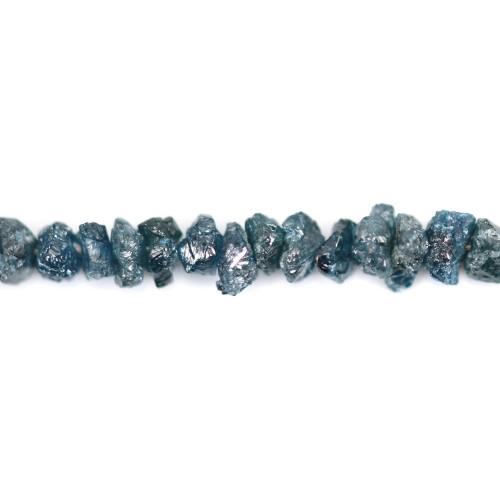
- Blue: Blue diamonds owe their color to the presence of boron.
- Green: Green diamonds are generally the result of exposure to natural radiation during their formation.
- Pink and red: These rare colors are usually caused by defects in the stone's crystalline structure.
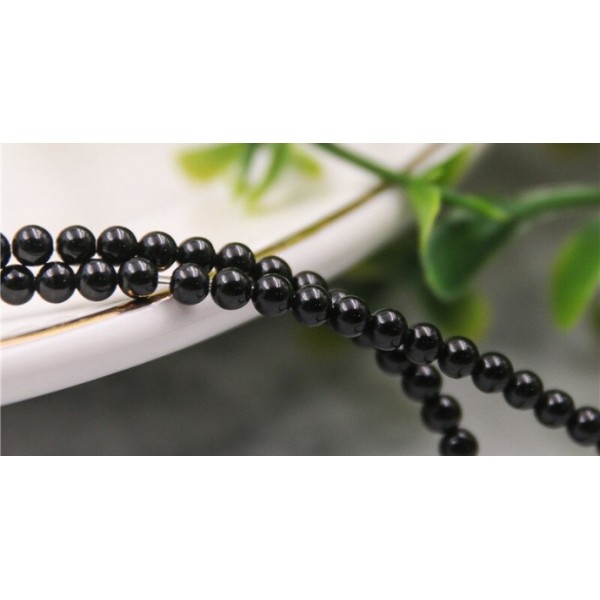
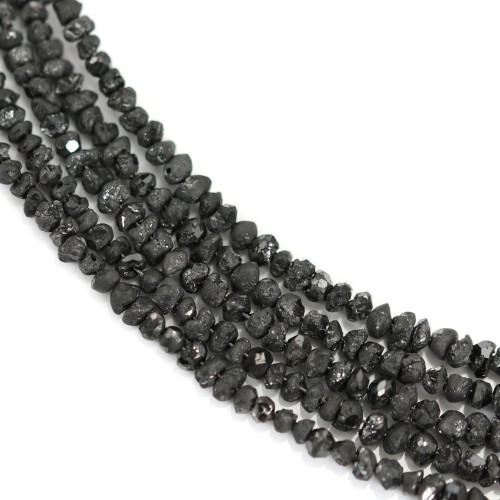
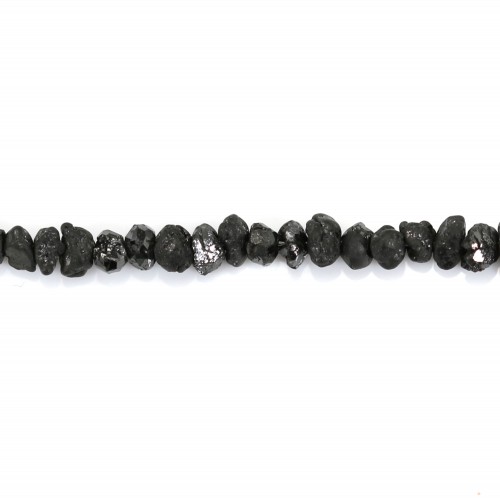
- Black: Black Diamonds usually contain numerous inclusions and imperfections, such as graphites.
- Purple and gray: These colors are generally the result of defects in the crystal structure, but can also be influenced by the presence of hydrogen.
The most common colors are yellow and brown. Rarer colors include red, green, violet and orange, followed by pink and blue.
Origin of Diamond
The main deposits of natural Diamonds are found in Russia, Botswana, Canada, Australia, South Africa and the Democratic Republic of the Congo.
Colored natural diamonds can be found in many different countries:
- Blue Diamond: Gemstone extremely rare, found mainly in South Africa, Angola, Congo, Botswana and India.
- Pink Diamond: Gemstone rare, found in Australia, South Africa, Russia and Canada.
- Yellow Diamond: Gemstone fairly common, found in South Africa and Australia.
- Green diamond: Gemstone extremely rare, found in Brazil, South Africa, the United States, Sri Lanka and Russia.
- Purple diamond: Gemstone extremely rare, found in Brazil and Australia.
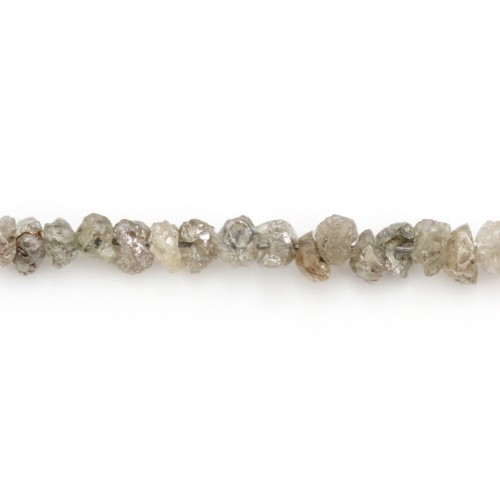
- Grey diamond: Gemstone less rare than the others, found in South Africa, Russia and Australia.
- Black Diamond: Gemstone the most common, found in Brazil, Russia, Australia and the Central African Republic.
- Orange diamond: Gemstone extremely rare, found in Australia, Africa and Brazil.
- Brown Diamond: Gemstone relatively common, found in Australia, South Africa and Siberia.
- Red Diamond: Gemstone rarest, found in Australia.
Diamond is the hardest mineral, with a hardness of 10 on the Mohs scale.
Virtues and meaning of Diamond in lithotherapy
In lithotherapy, Diamond is a stone of harmony and introspection.
The natural stone Diamond in lithotherapy
On the physical level, Diamond is renowned for its powerful energetic properties in lithotherapy. It reduces stress and strengthens the body and muscles. Diamond improves strength and stamina, and helps boost the immune system and detoxify the body.
On the mental level, Diamond gemstone promotes harmony with body and mind, receiving vibrations with cosmic forces, thus enabling contact with the inner self. In lithotherapy, this natural stone brings clairvoyance, clarity of mind and calm, while warding off troubling emotions such as anxiety and fear. Last but not least, Diamond enhances relaxation, dreams and, above all, channeling abilities, enabling the development of inner peace.
The different colors of Diamond bring different virtues and benefits to lithotherapy:
- Blue diamond: This natural stone strengthens the body, bones and skin and soothes insect bites. It promotes blood circulation and strengthens the immune and cardiac systems. It also enhances intuition and clairvoyance, and promotes meditation to create a better connection with the spirit. Finally, it improves sleep and ward off negative energies.
- Pink Diamond: The Pink Diamond stone boosts mental strength and metabolism. It promotes regeneration, calms aggressive emotions and, above all, brings strength and courage. Last but not least, this natural stone enhances creativity and intuition, helping you to see your projects through to the end and make better decisions.
- Yellow Diamond: This stone stimulates the nervous system, helps improve mental coordination and boosts the immune system. Yellow Diamond also enhances clarity, wisdom and self-awareness. Finally, it supports and stimulates the intellect and enhances creativity.
- Green Diamond: Protects against nightmares, insomnia and restful sleep. This natural stone is said to combat stress and anxiety and detoxify the body. Green Diamond protects against dark energies, receives good energies and spreads them. It also enhances perception, communication, clairvoyance and clarity of mind. Finally, it harmonizes relationships with others and with oneself, strengthening the connection between body and mind and bringing relaxation.
- Violet Diamond: The Violet Diamond gemstone helps detoxify the body and stimulate the immune system. It also promotes wound healing. In lithotherapy, this natural stone is linked to intuition, inspiration and spiritual balance. Finally, it helps deepen self-awareness and promotes personal growth.
- Grey Diamond: Grey Diamond enhances detoxification and purification of the body. It balances hormones and improves brain function. This natural stone enhances mental and physical balance, stability and protection from negative emotions. Finally, it brings peace and tranquility.
- Black diamond this precious stone favors love relationships, and is said to bring love at first sight. It also promotes fertility, helps women get pregnant and reduces stress while strengthening the muscular system. This natural stone brings prosperity, wealth, confidence, courage and creativity. Finally, it protects against electromagnetic waves and promotes positive energies.
- Orange Diamond: This natural stone stimulates the digestive system and improves breathing, especially lung function. Orange Diamond helps improve physical energy and recovery after exercise. In addition, it increases energy, stamina and enthusiasm. Finally, it stimulates energy and helps promote a positive attitude.
- Brown diamond: This is often associated with earthiness, practicality and stability. It is said to help improve strength and stamina. It supports concentration and the accomplishment of pragmatic tasks.
- Red diamond: Thisrare gemstone isknown to promote vitality and strengthen passion. It helps fluidify blood circulation and increase vital energy. In addition, the natural stone Red Diamond is generally associated with passion, love and ardor. Finally, it promotes energy and enthusiasm.
Please note that lithotherapy cannot replace medical treatment or expertise.
Diamond stone meaning
Diamond is a symbol of purity, perfection and eternity.
Diamond stone is associated with the heart chakra, which promotes benevolence, friendship, love and empathy. In addition, this chakra reinforces positive emotions such as love and amplifies open-mindedness. Diamond is also linked to the crown chakra, which enhances spiritual connection, faith and wisdom.
The virtues and chakras are different for each Diamond according to its color:
- Blue Diamond is associated with the Throat chakra, which facilitates communication and fluency of speech, self-expression and promotes honesty.
- Pink and green diamonds are associated with the heart chakra.
- Yellow diamonds are associated with the solar plexus chakra, which benefits the digestive system and enhances vitality and dynamism.
- Violet diamond is associated with the crown chakra.
- Gray diamond is associated with the root and crown chakras.
- Black diamond brown and red diamonds are associated with the root chakra, amplifying calm, confidence and blood circulation.
- Orange diamond is associated with the sacral chakra, which stimulates creativity, joie de vivre and energy .
Diamond is associated with the astrological signs of Taurus and Aquarius. It is also the birthstone of April. Diamond is ideal for celebrating 10 years, 60 years and 75 years of marriage.
Diamond care, purification and recharging
To care for your Diamond stones, we suggest a few methods.
Cleaning and purifying
It's important to thoroughly clean and purify your Diamond so that it retains its natural brilliance:
- Rinse the stone in clear lukewarm water with a little soap and brush off any dirt with a soft toothbrush for a short time before using a soft cloth to gently dry the stone,
Reloading
Recharging Diamond stone is not necessary, as it has a lot of energy.