Dive into the fascinating world of Amber, a fossil resin with golden hues. Explore its age-old history, its...
Azurite Chrysocolla: History, Origin, Composition, Virtues, Significance and Recharging of the stone
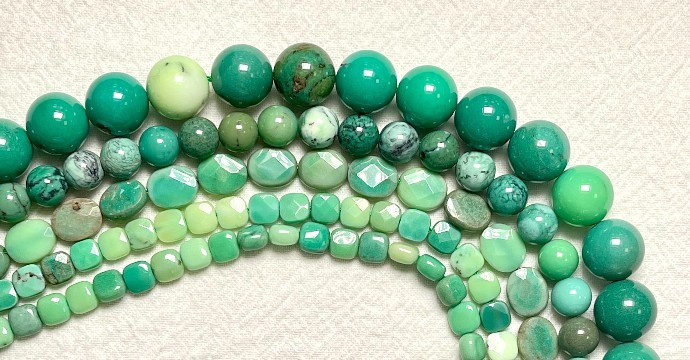
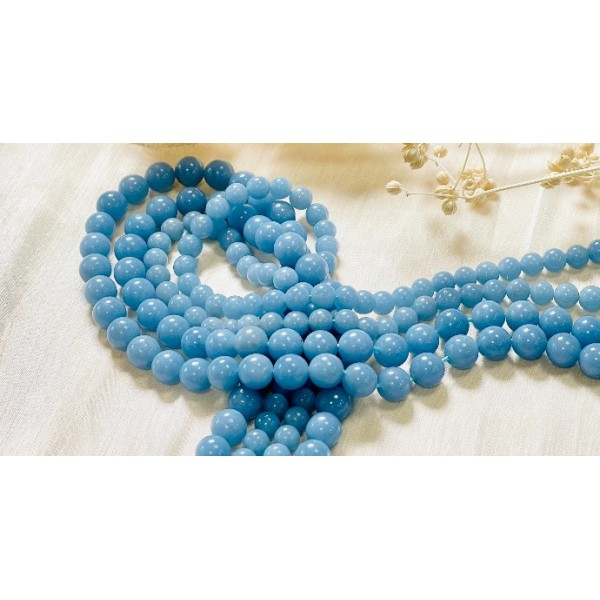
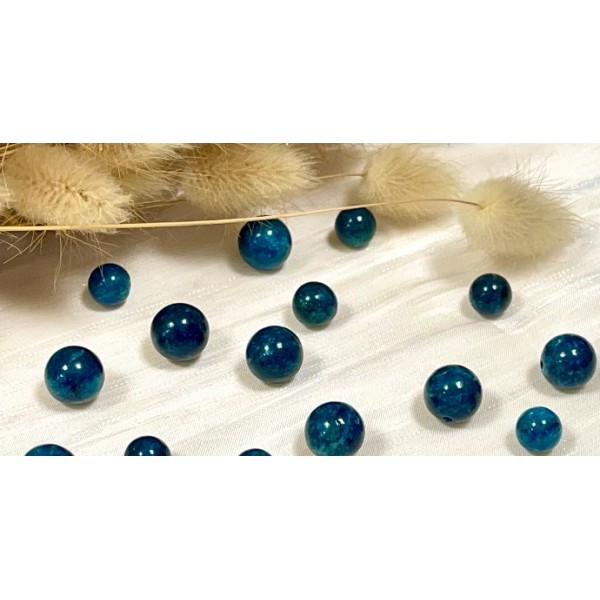
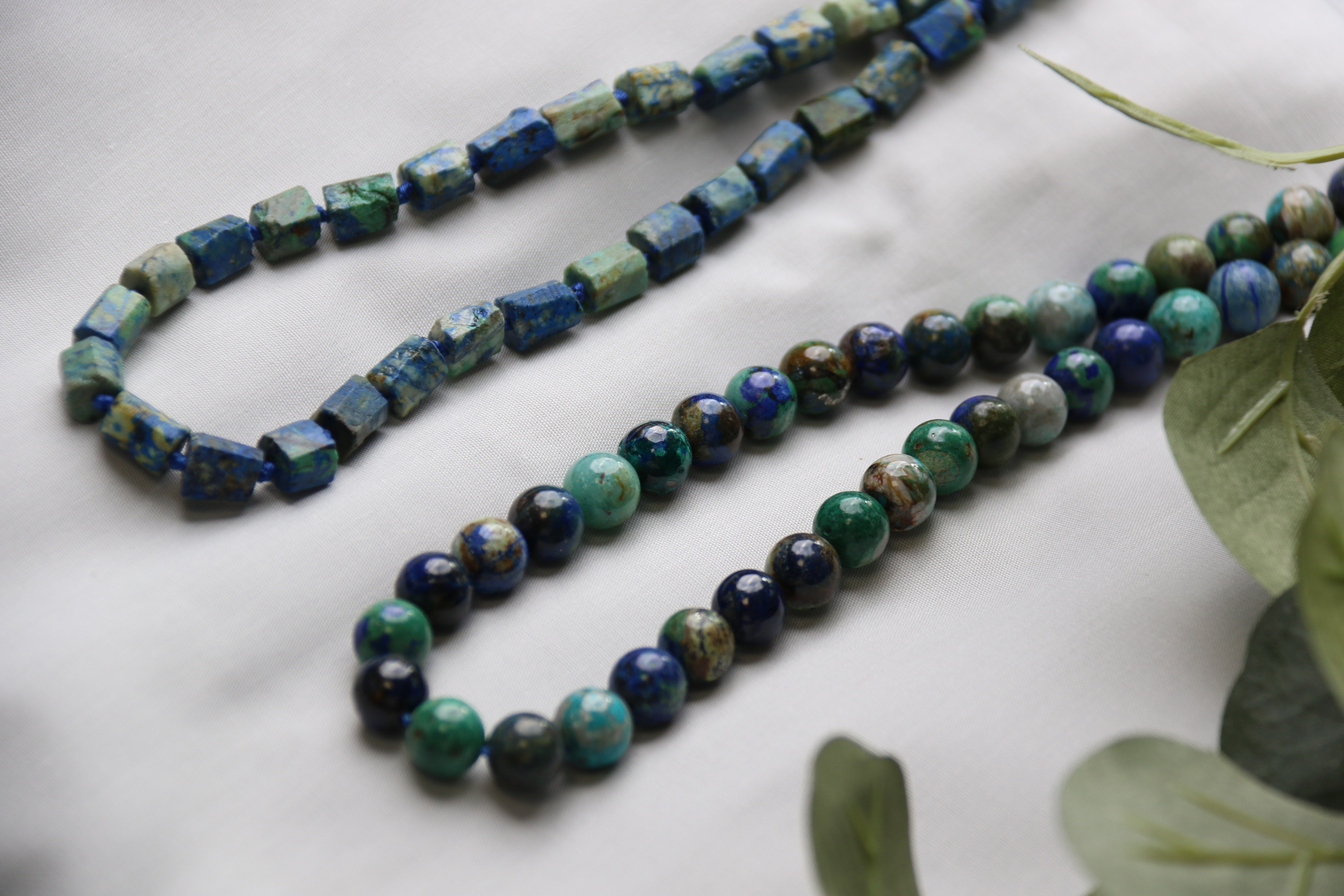
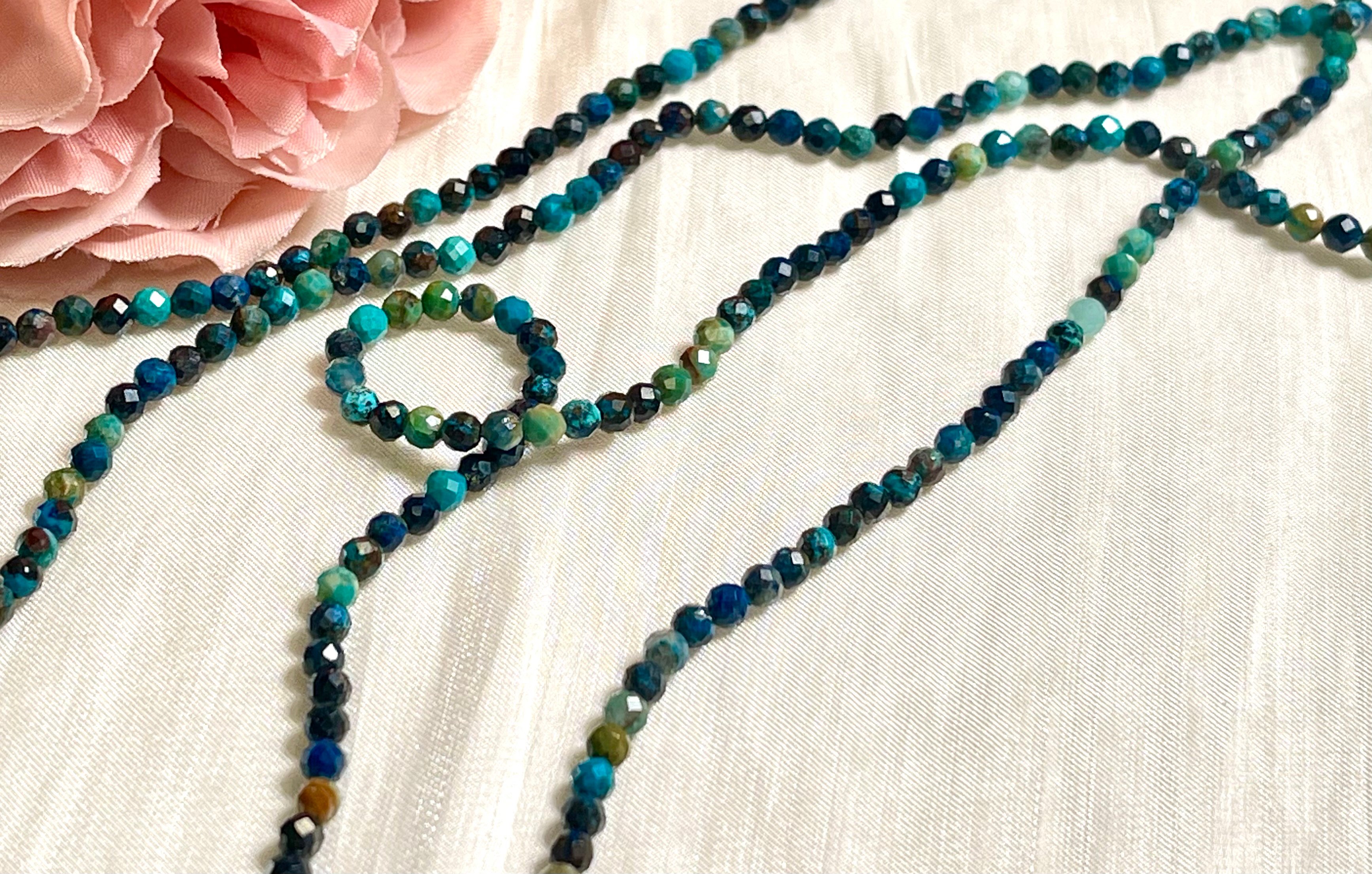
Azurite and Chrysocolla are both mineral species that can be found in the same deposit and can occur together as a mineral called Azurite . Azurite is a dark-blue copper carbonate mineral, and Chrysocolla is a hydrous copper silicate mineral that can vary in color from blue to brown to green. Azurite Chrysocolla forms as a result of the alteration and oxidation of copper ore deposits, and usually appears as a massive, soft, earthy material. It has a unique combination of Azurite blue and Chrysocolla green, which can also be found in various forms, cabochons, beads, rough and polished stones. This stone is often used as an ornamental stone and in jewelry.
History of Azurite Chrysocolla
History of Azurite
The stone Azurite comes from the Persian word "lazhward", meaning "blue", in reference to its azure color. Before being called Azurite, the stone has been known by various names and beliefs throughout time, depending on the people and civilizations involved.
Azurite was called the ancient Greek "kuanos" meaning "cyan". It was imported from Armenia and Cyprus. An alchemist by the name of Theophrastus referred to the stone as "Gemstone d'Arménie" or "Lapis Armenis" in his book "Traité des Gemstones".
During the Middle Ages, France called it "Chessylite", referring to the town where Azurite was found, i.e. Chessy-les Mines. It was used to color manuscripts.
In 1824, the name was definitively changed to "Azurite", named by mineralogist François Sulpice Beudant, who described Azurite in his work "Traité élémentaire de minéralogie". Today, the IMA (International Mineralogical Association) accepts and grants the name "Azurite" to the stone.
In ancient Egypt, Azurite was crushed into powder for pigments and used for its beliefs. It was thought that drawing a third eye on the forehead with this powder would enhance one's powers.
For the Mayans, Azurite is a stone of connection with the invisible world.
And in Atlantis, it was considered a regenerative and soothing stone. Today, Azurite is used for its healing properties and, above all, for jewelry.
History of the Chrysocolla stone
The name Chrysocolla or "golden glue" comes from the Greek "chrysos" meaning "gold" and "kola" meaning "glue". Its name was given by the philosopher Theophrastus in 315 B.C. in his "Treatise on Stones". Chrysocolla was once used as a "glue" for soldering gold.
In the Middle Ages, Chrysocolla stone was sought after for its medicinal virtues, such as accelerating healing. It is said to have been worn by the famous Cleopatra for its soothing properties, calming her anger.
During the Renaissance, Chrysocolla pigments were used for fresco painting and manuscript/parchment illustration.
From the 19th century onwards, Chrysocolla was used as ornaments for artistic objects and jewelry, notably gold jewelry. For believers, Chrysocolla is a symbol of water, representing a close connection with nature.
Chrysocolla is still used in jewelry today.
Origin and composition of Azurite Chrysocolla stone
The origin of Azurite stone
Azurite is composed of hydrated copper carbonate, with the chemical formula Cu3(CO3)2(OH)2. Its density is 3.8.
This magnificent stone offers deep bluish azure or night colors. It can be translucent, giving it a vitreous lustre.
Azurite is formed by carbonate water mixing with copper ores. From this mixture, copper deposits are transported to an oxidation zone combining carbonate sedimentary rocks and waters rich in copper sulfates.
Its formation is identical to that of Malachite, so it's not uncommon to find Malachite or Chrysocolla alongside Azurite. 3
Azurite can be found in Arizona, Morocco, Mexico and Russia.
Its hardness ranges from 3.5 to 4 on the Mohs scale, making Azurite a very fragile stone.
Origin of the Chrysocolla stone
Chrysocolla belongs to the cyclosilicate family, a variety of copper hydrosilicate with the chemical formula (Cu,Al)2H2Si2O5(OH)4-nH2O.It is composed of various elements, including oxygen, silica, copper, aluminum and hydrogen. It has a specific gravity of 2.2.
Chrysocolla is formed by silica-concentrated water flowing over copper veins, i.e., by the alteration of copper deposits. Chrysocolla can be found in various forms (crusts, botryoids, stalactites or stalagmites). What's more, some traces of Chrysocolla can be found in other minerals such as Azurite, Malachite, Quartz, Hematite and other copper-based minerals.
Because of its properties, Chrysocolla is a fragile stone, especially because of its low water content and sensitivity to high temperatures. What's more, this stone is not easy for jewellers to work with, as it is not hard enough. Like Malachite, natural Azurite is very porous.
Varieties of Chrysocolla can also be seen:
- - Eilat stone" is a mixture of Chrysocolla, Azurite, Malachite and Turquoise. It was found in King Solomon's ancient copper mines.
- - Simply combined with Quartz, the stone becomes a "Chrysocolla Quartz".
- - Finally, Azulite is a mixture of Malachite, Azurite, Dioptase and Chrysocolla.
Chrysocolla can be found all over the world. However, the main deposits are found in Australia, Germany, the United States, Russia, England, Congo-Kinshasa and France.
Chrysocolla hardness varies between 2 and 4 on the Mohs scale.

Virtues and Significance of Azurite Chrysocolla in Lithotherapy
Fine stone Azurite Chrysocolla is also known for its metaphysical properties and is said to have a calming, soothing energy, promoting inner balance and tranquility. It is also a powerful stone for communication, enabling clearer and more effective communication in all areas of life. Find out more about the virtues and significance of Azurite and Chrysocolla below.
Azurite in Lithotherapy
The stone Azurite is generally regarded as a stone of health.
It has impressive physical benefits. On the one hand, it enhances mental capacity and knowledge. Azurite enhances sensory perception, making the wearer more responsive and focused. On the other hand, it is considered a health stone for its anti-inflammatory, anti-microbial and regenerative properties.
Azurite is quite simply spiritually beneficial. First of all, it strengthens the spiritual bond by ridding the wearer of all obstacles in his or her path. It also promotes communication with the invisible world. Last but not least, this stone helps to open the mind and enables human beings to anchor and rebalance their physical and psychological state.
Chrysocolla in lithotherapy
The stone Chrysocolla is considered a stone of creativity.
From a physical point of view, Chrysocolla stone helps with throat-related problems such as breathing, oral communication and even stammering. In addition, its soothing and strengthening properties are highly beneficial for athletes. Chrysocolla improves blood circulation, strengthens the body (muscles/bones) and relieves backache and cramps. It is also effective in relieving menstrual pain.
From a psychic point of view, Chrysocolla stone can block all negative influences (jealousy, anxiety...), enabling its wearer to regain inner peace. It facilitates communication and strengthens friendship, understanding and relationships. Natural Azurite and Chrysocolla stones are a true source of tranquility and healing. They will help you heal physical and emotional pain.
Please note that lithotherapy is not a substitute for medical treatment or expertise.
Significance of Azurite Chrysocolla stone
Natural stone Azurite symbolizes astral travel, spiritual and intellectual evolution. Azurite is associated with the 3rd-eye chakra, as it facilitates anchoring and spiritual connection. The coronal chakra is also linked to Azurite for its harmonizing properties between body and mind. The stone correlates with the astrological signs Sagittarius, Capricorn and Libra. Azurite is perfect for 56th wedding anniversaries.
Natural stone Chrysocolla symbolizes friendship, peace and harmony. Chrysocolla is associated with the throat chakra for its beneficial effects on the throat and communication. It is also associated with the heart chakra, as it promotes friendship and love. Chrysocolla is linked to the zodiac signs Libra, Gemini and Sagittarius. It is also the stone for 26-year marriages.
Azurite Chrysocolla stone care, purification and recharging
There are several ways to clean and purify Azurite Chrysocolla stone:
- Dry cleaning: You can use a soft, dry cloth, such as a microfiber cloth, to remove dust and dirt from the stone.
- Steam cleaning: It is possible to clean Azurite Chrysocolle with steam, but it is important to ensure that the stone does not come into direct contact with water and that the steam is not too hot to avoid damaging the stone.
- Cleaning with oil: Azurite Chrysocolla can be cleaned with olive oil or jojoba oil to nourish and protect the stone. Apply a small amount of oil to a soft cloth and clean the stone thoroughly.
- Purification by sunlight: Azurite Chrysocolla can be purified by placing it outdoors for a few hours to let the sun's rays purify and energize it.
- Purification with incense: Azurite Chrysocolla can be purified by fumigating it with incense.
There are several methods for recharging the stone Azurite Chrysocolla :
- Solar recharging: By placing it outdoors for a few hours to let the sun's rays purify and energize it. It is important to note that this method can damage the stone if exposed for too long.
- Recharging by the moon: By placing it outside at night under the moon. The moon is said to have purifying and regenerative properties.
- Recharging by the earth: Azurite Chrysocolla can be recharged by placing it on a bed of salt or in direct contact with the earth, such as a garden or park.
- Fumigation recharging: Azurite Chrysocolla can be recharged by fumigating it with incense.
- Recharging with crystals: place Azurite Chrysocolla alongside other crystals and gemstones such as rose quartz or amethyst.
It is generally not advisable to clean Azurite Chrysocolla with water, as this can damage or alter the stone. Azurite Chrysocolla is a soft stone that can easily crack or discolor when exposed to water or humidity.